“Marketing Should Not Rescue a Poor-Quality Product” – Borys Tsomaia on Buyer Trust and a Developer’s Reputation
At SBC Summit Ukraine Lviv 2026 we spoke with Borys Tsomaia, marketing director of RIEL. The conversation touched on a question that remains relevant for any business – can marketing compensate for the flaws of a product? They also discussed how a developer can win buyers’ trust along the entire…
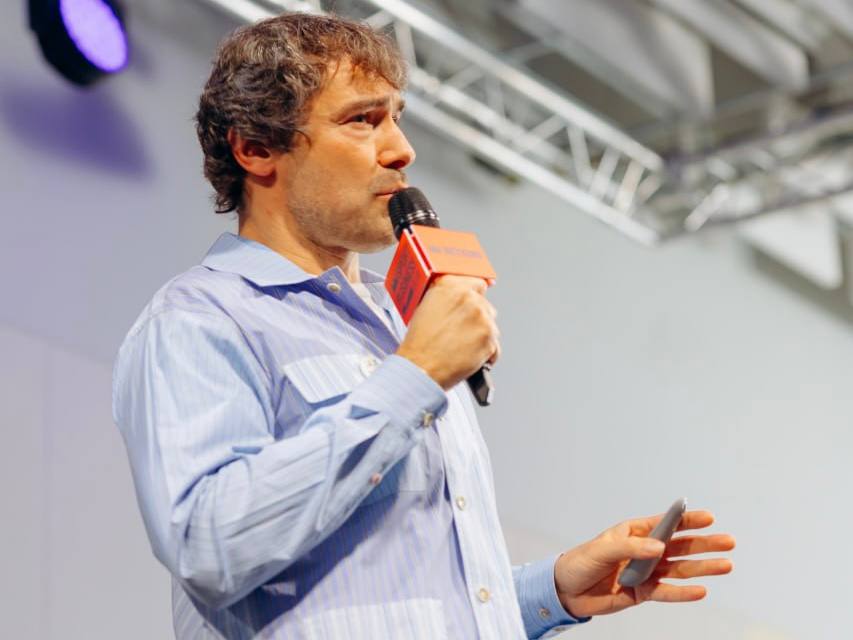
At SBC Summit Ukraine Lviv 2026 we spoke with Borys Tsomaia, marketing director of RIEL. The conversation touched on a question that remains relevant for any business – can marketing compensate for the flaws of a product? They also discussed how a developer can win buyers’ trust along the entire journey – from the first acquaintance with the project to receiving the finished home.
Can Strong Marketing Rescue a Product That Does Not Meet the Customer’s Expectations?
Borys Tsomaia admits that from a marketer’s point of view one can claim that effective promotion can help almost any product. However, with considerable experience in the field, he is convinced that marketing should not compensate for poor quality.
“Marketing definitely should not rescue a poor-quality product, because that is deception. Ideally, marketing should start precisely with a quality product. Then it is a proper, great symbiosis,” the speaker explains.
At the same time, even the best product does not guarantee a business fast growth without proper promotion. According to Tsomaia, the absence of marketing can make the path to results much harder and more expensive. Although advertising costs are often perceived as a significant part of the budget, it is marketing that helps a business reach its goals faster.
“If we want to reach the right business goals and results quickly and as efficiently as possible, there is no way without marketing, no matter how good the product or service is,” he notes.
Trust as the Foundation of Loyalty
Special attention in the conversation was given to the real estate market and to how developers can preserve buyers’ trust throughout the whole process of acquiring a home.
In Borys Tsomaia’s opinion, the answer is quite simple – you need to do your job well. In particular, the finished property must match what the company showed customers in visualisations, advertising materials and other communication channels.
“When what was promised matches what has really been done, loyalty appears by itself. Because the basis of loyalty is trust. If a customer feels that you did what you promised, then everything that follows is much easier,” says RIEL’s marketing director.
He also stresses that trust and reputation have now become a mandatory condition for working in the market. If a company has a positive track record of completed projects, and the people who already live in its buildings are satisfied with the result, this becomes a weighty competitive advantage.
What Influences the Choice of Real Estate?
Speaking about buyer behaviour, Borys Tsomaia refers to the regular audience research carried out by the company. In particular, using the Kyiv market as an example, he notes that in conditions of full-scale war, safety factors and the location of the property have been added to the criteria for choosing a home.
However, alongside them there remains one more fundamental factor – trust in the developer and its reliability.
“One of the main ones is still trust and the developer’s reliability. That speaks for itself,” the speaker summed up.
Source: Sport Business Media (sportbusiness.media), https://sportbusiness.media/2026/11/06/marketyng-ne-povynen-ryatuvaty-vid-neyakisnogo-produktu-borys-czomaya-pro-doviru-pokupcziv-i-reputacziyu-zabudovnyka/